
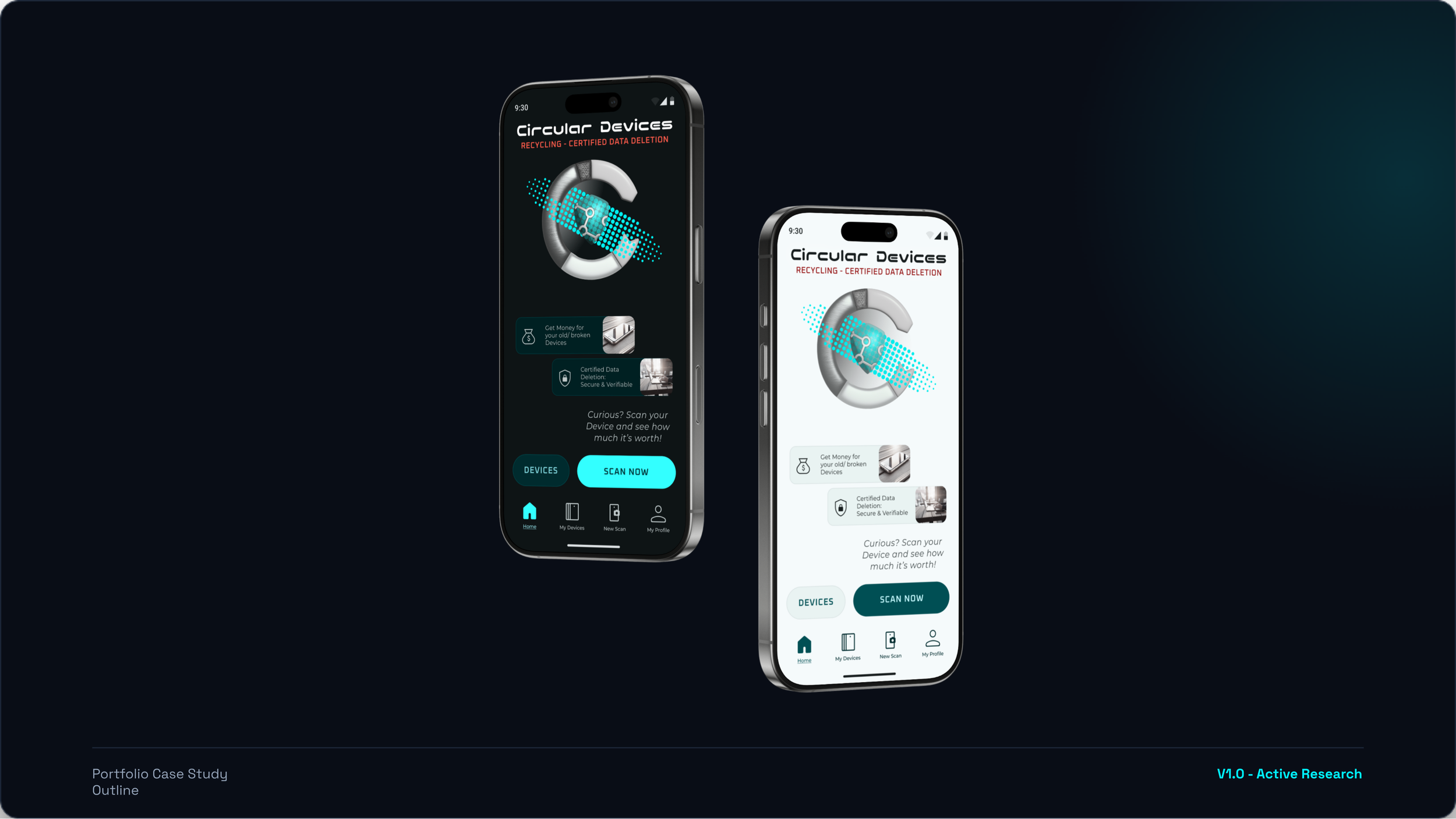


The Circular Hardware Loop
- Initial Thoughts
Category: Systems Design / AI Research / Ethics
Role: Lead Systems Designer & Researcher
The Vision Electronic waste is the world's fastest-growing waste stream, yet it contains an "Urban Mine" of perfectly functional components. This project proposes a multimodal AI infrastructure that bridges the gap between discarded hardware and generative reuse, transforming "waste" into a structured, verifiable resource library.
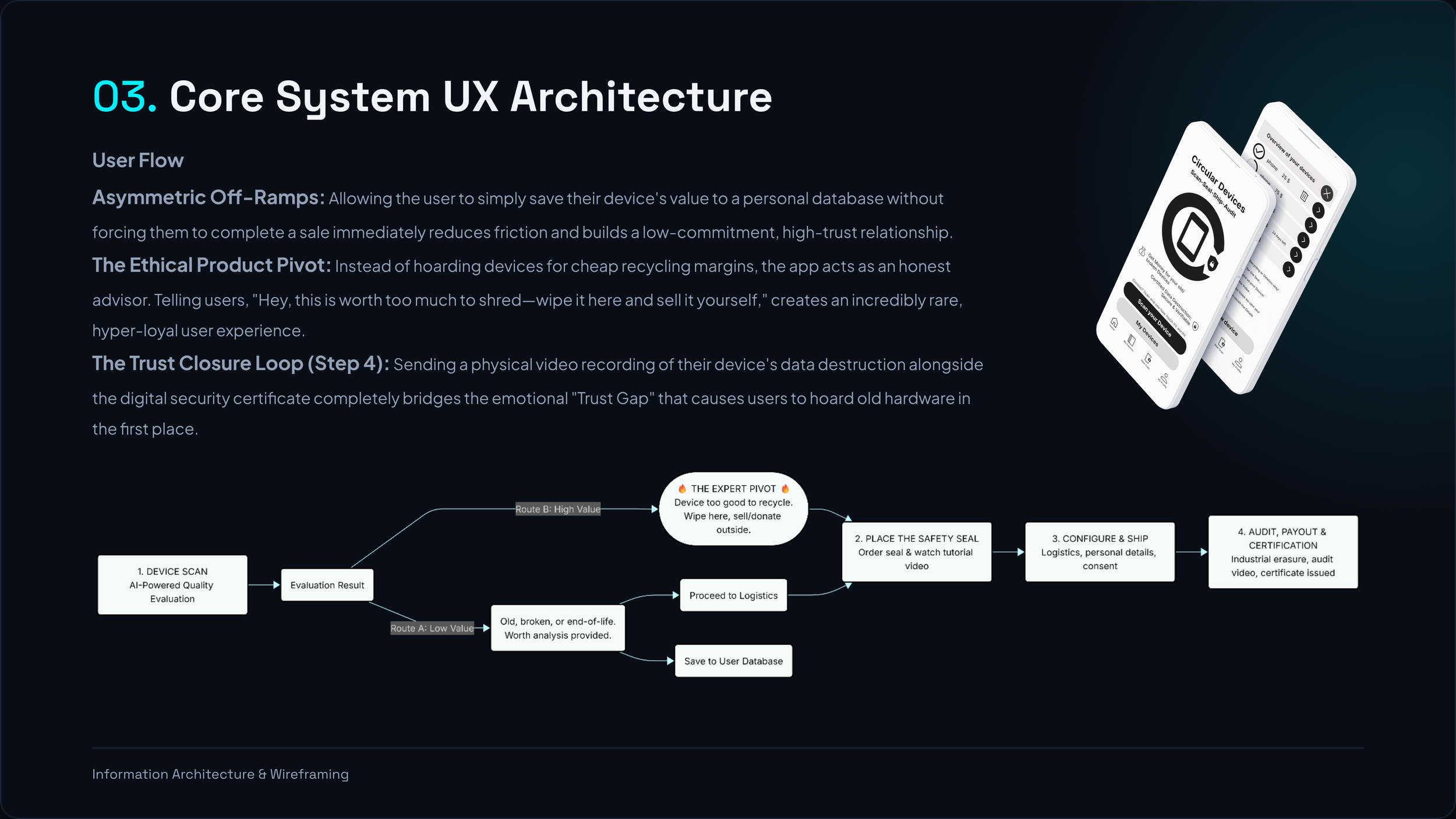
Pillar 1: The Incentivized Intake (Scan-to-Earn). The first friction point in the circular economy is user motivation.
AI-Assisted Recognition: Utilizing computer vision (Gemini API) to identify hardware components from a mobile scan, providing instant technical specifications and material value.
Economic Incentive: Integrating a "Material Value Quote" system where users receive immediate compensation or carbon credits for contributing their devices to the verified loop.
Pillar 2: The Trust Layer (Privacy Sovereignty) A "Silent Mine" exists in junk drawers because of the Trust Gap. Users fear their data will be misused.
Verifiable Sanitization: A transparent UX that guides users through cryptographic data destruction. For non-technical users, the system connects them with "Neutral Handlers" who provide digital proof of erasure.
Safety First: Specific protocols designed for high-risk users (e.g., protection against digital stalking or domestic abuse) to ensure the device is "digitally dead" before it is physically recycled.
Pillar 3: The Certified Pipeline (Chain of Custody) Once scanned and wiped, the device enters a transparent, traceable path.
Digital Twin Passport: Every component is assigned a digital identity that follows it from the original device to a certified recovery center and, eventually, into a new product.
Leakage Prevention: AI-driven audits ensure that high-value materials (Lithium, Cobalt, Gold) identified during the initial scan are accounted for at the end of the processing line.
Pillar 4: Generative Reuse (The Architect’s Library) The loop closes when the data is handed back to the creators.
CAD Integration: A Python-based plugin that allows architects and product designers to "query" the available local e-waste inventory to find parts for new prototypes.
Design for Adaptability: Shifting the industry from "Fixed Standards" to "Adaptive Design," where AI helps us build with what we already have.
"From Spatial Structures to Digital Ecosystems"As an architect, I was trained to think in 50-year lifecycles for buildings. As a systems designer, I apply that same 'Structural Logic' to the devices in our pockets. The Circular Hardware Loop is my blueprint for a world where technology doesn't end in a landfill, but returns to the designer’s desk as a verified, safe, and ready-to-use resource.
Project Technicalities:
Vision: Multimodal LLM integration (Object Detection & Technical Schema Extraction).
Design: Figma (System Flow & High-Fidelity UI), Rhino/Grasshopper (Parametric Reuse Logic).
Focus: Circular Economy, Data Sovereignty, Inclusive Safety.